Imagine opening your wardrobe and feeling like you’ve stepped into a boutique rather than a cluttered closet. Wardrobe interiors aren’t just about storage; they’re about creating a sanctuary for your style. With the right design, even the most chaotic collections can transform into a harmonious haven where every piece has its place and every outfit tells a story.
Understanding Wardrobe Interiors
Wardrobe interiors play a crucial role in personal organization and style expression. A well-structured wardrobe enhances functionality while providing a visually appealing space.
Definition and Importance
Wardrobe interiors encompass all elements within a wardrobe that contribute to its organization and aesthetic appeal. They include features like shelves, drawers, and hanging spaces. Properly designed interiors support easy accessibility, making it simpler to select outfits. An organized wardrobe prevents clutter and maximizes space efficiency. It’s important to prioritize storage solutions that align with individual needs, as this fosters a tidy environment and simplifies daily routines.
Key Components of Wardrobe Interiors
Key components contribute significantly to the efficiency of wardrobe interiors. Shelves provide essential vertical storage for shoes, bags, and folded clothing. Drawers serve as ideal spaces for smaller items, such as accessories and undergarments. Hanging rods allow for the storage of longer garments, promoting wrinkle-free outfits. Lighting highlights interior features, making it easier to find items. Mirrors enhance functionality while adding an illusion of spaciousness. Each component creates a harmonious blend that elevates the wardrobe’s usability and overall design.
Types of Wardrobe Interiors
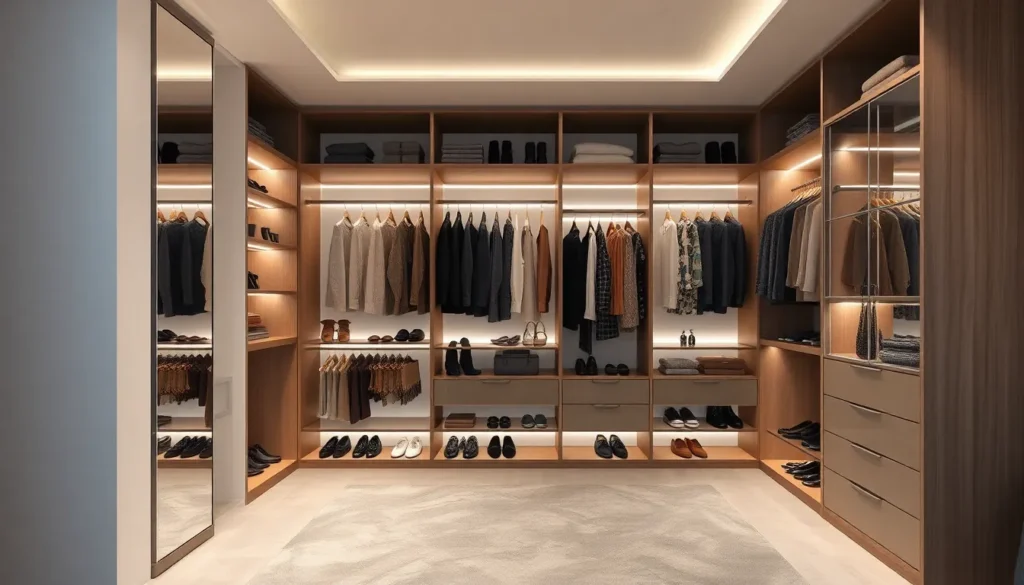
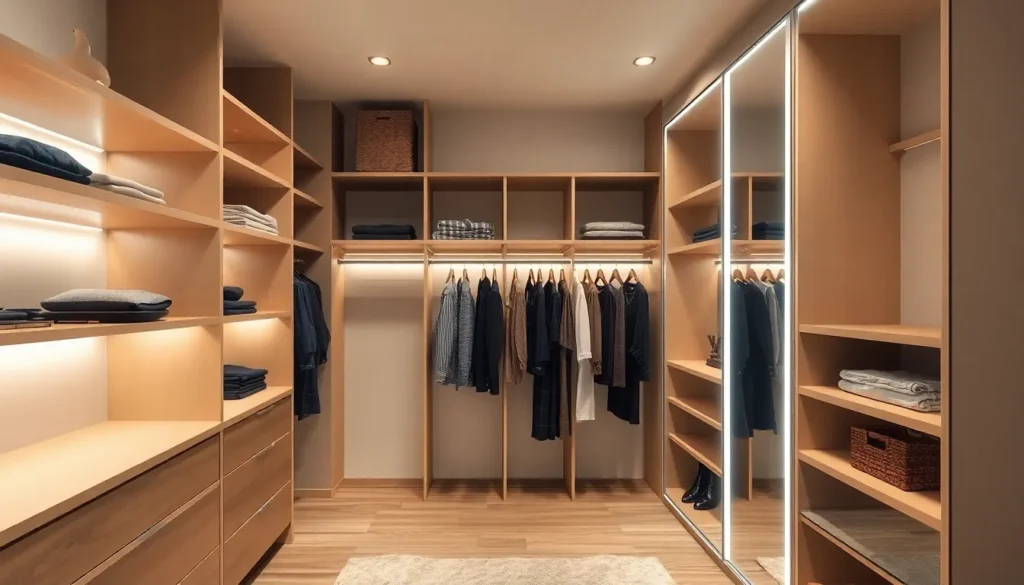
Various wardrobe interior types cater to different space and style needs. Each design serves unique functions while enhancing organization and aesthetics.
Walk-In Wardrobes
Walk-in wardrobes create an expansive storage area with ample space for clothing, accessories, and shoes. They allow easy access to items, eliminating clutter and enhancing visibility. Design elements can include built-in shelving, drawer systems, and dedicated hanging spaces. Enhancing the user experience, full-length mirrors and strategic lighting contribute to an inviting atmosphere. Personalization options vary, with choices often reflecting individual styles and preferences, making it a truly tailored space.
Sliding Door Wardrobes
Sliding door wardrobes offer a space-efficient solution suitable for compact living areas. With doors that glide to the side, these wardrobes enable seamless access without requiring extra room for swinging doors. Interior layouts typically feature adjustable shelves, hanging rods, and compartments for accessories. Customization options abound, allowing users to design the interior according to their storage requirements. Finishes for sliding doors can range from mirrors to wood veneers, enhancing the wardrobe’s style while maximizing functionality.
Freestanding Wardrobes
Freestanding wardrobes provide flexible and versatile storage options, making them ideal for various settings. These units stand independently, allowing for easy relocation and reconfiguration within a space. Interior organization often includes hanging rails, shelves, and drawer sections for a mix of items. Users can select styles that blend with existing decor or make a bold statement. By offering various sizes and designs, freestanding wardrobes cater to diverse storage needs, from small apartments to larger homes.
Designing Your Wardrobe Interiors
Designing wardrobe interiors involves careful planning to create functional and stylish spaces. A well-thought-out design aligns with individual needs while maintaining aesthetic appeal.
Space Considerations
Space plays a crucial role in wardrobe design. Evaluating dimensions ensures that every component fits seamlessly. Optimal use of vertical space enhances storage capacity. Individuals should prioritize the height and depth based on their clothing types. Additionally, accounting for the surrounding area allows for easy access and movement. Utilizing corner spaces can significantly increase functionality and storage options. Effective organization not only maximizes space but also contributes to a clutter-free environment.
Color and Material Choices
Color and material selections influence the overall ambience. Neutral tones create a timeless aesthetic, while bold colors can serve as statement features. Materials like wood provide warmth and durability, while metal elements offer a modern touch. It’s essential to consider the wardrobe’s surroundings when choosing colors. Harmonizing with existing decor fosters a cohesive look. Mixing textures adds depth and interest, enhancing the visual appeal. Ultimately, the right choices reflect personal style and functionality.
Functional Layouts
Functional layouts improve usability significantly. Starting with an ideal arrangement of hanging rods allows for easy access to clothing. Incorporating shelves at varying heights accommodates different items, from shoes to handbags. Drawers dedicated to accessories maintain organization and reduce clutter. Using dividers within drawers enhances accessibility for smaller items. Lighting considerations enhance visibility, making it easier to locate garments. These layouts ultimately create a smooth daily routine, blending functionality with personal expression.
Wardrobe Interiors Trends
Wardrobe interiors reflect evolving styles and practices. Trends for this year focus on personalization and functionality.
Popular Styles for 2023
Minimalist designs dominate the wardrobe landscape in 2023. Clean lines and neutral palettes enhance simplicity while ensuring elegance. Mixed materials create visual interest, making wardrobes not just storage but also a design statement. Open shelving is another trending feature, allowing for easy access and showcasing personal collections. Textured finishes on drawers offer a tactile experience, enhancing both style and depth in the overall look.
Sustainable Materials in Wardrobe Design
Sustainability remains a key consideration in wardrobe interiors this year. Eco-friendly materials, such as reclaimed wood and bamboo, reduce environmental impact while promoting durability. Manufacturers increasingly prioritize non-toxic finishes that ensure safety and longevity. These materials contribute to aesthetics by adding warmth and authenticity, reflecting a growing awareness of eco-conscious living. Incorporating sustainable elements adds unique character to wardrobe designs, aligning personal style with environmental responsibility.