Imagine waking up to the smell of freshly brewed coffee, all thanks to your smart coffee maker that knows just when to start brewing. Welcome to the smart home lifestyle, where convenience meets cutting-edge technology. It’s not just about having gadgets; it’s about transforming everyday living into an effortless experience that makes life feel like a sci-fi movie—without the aliens.
From voice-activated assistants to smart thermostats that learn your habits, the smart home lifestyle offers a blend of comfort and efficiency that’s hard to resist. It’s like having a personal butler, minus the bowtie and awkward small talk. With a few taps on your smartphone, you can control everything from your lights to your security system, leaving you more time to binge-watch your favorite shows or perfect your dance moves in the living room. Let’s dive into how this tech-savvy lifestyle can elevate your home and simplify your day-to-day routine.
Overview Of Smart Home Lifestyle
Smart home lifestyle integrates technology into everyday living, enhancing both convenience and efficiency. Homeowners control various systems with smartphones, allowing for seamless management of everything from lighting to security. Smart appliances adapt to user habits, offering tailored experiences that increase comfort. For instance, smart thermostats learn preferences and adjust temperatures automatically, ensuring optimal comfort while saving energy.
Devices like voice-activated assistants simplify tasks by responding to voice commands. These assistants manage schedules, play music, or provide information instantly. Smart lighting systems respond to presence, adjusting brightness based on occupancy, which further optimizes energy usage.
Home security benefits significantly from smart technology. Surveillance cameras, doorbell cameras, and smart locks provide real-time monitoring and remote access. Notifications alert homeowners to suspicious activities, enhancing peace of mind.
In addition, smart home systems promote sustainability. Energy-efficient appliances reduce consumption, while home automation optimizes resource use. This commitment to efficiency often results in lower utility bills, benefiting both the environment and finances.
Also notable, smart home technology supports a more enjoyable living experience. Integration of various systems lets users create personalized settings, such as mood lighting for entertaining or automated routines for daily waking. The smart home lifestyle not only facilitates modern living but also encourages a more balanced and manageable day-to-day life.
Overall, adopting smart home technology offers numerous benefits, creating a lifestyle centered around comfort, convenience, and enhanced security.
Benefits Of Smart Home Living
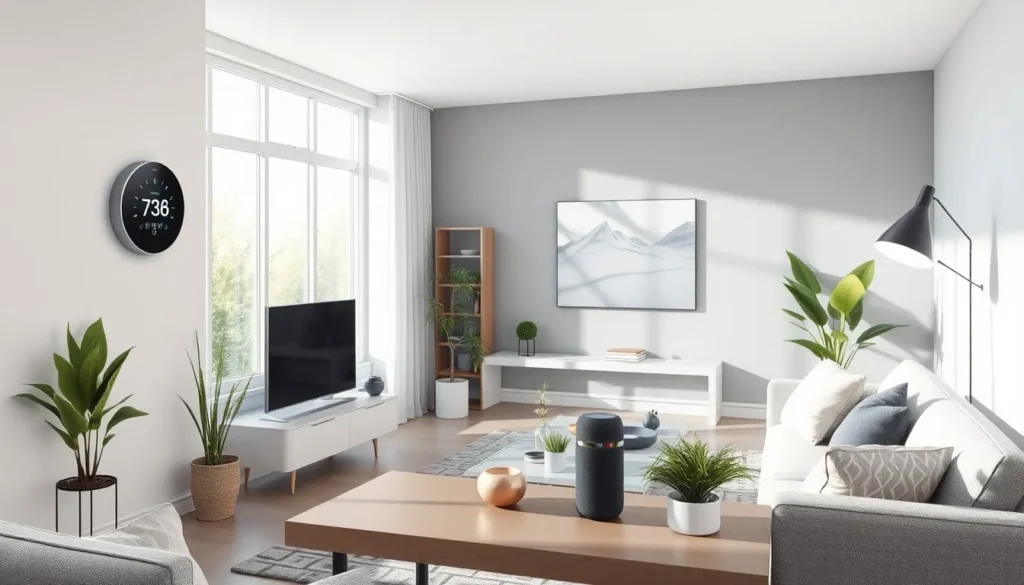
Smart home living offers numerous advantages that enhance everyday experiences, promoting a lifestyle centered around convenience and efficiency.
Convenience And Comfort
Smart technology transforms daily tasks into effortless experiences. Homeowners control lighting, temperature, and security from their smartphones. Voice-activated devices simplify interactions, allowing individuals to perform actions with simple commands. For instance, a voice command can turn off lights or lock doors, providing an extra layer of ease. With smart appliances, routines become more streamlined, contributing to an organized lifestyle. Enhanced comfort arises from systems that learn user preferences, ensuring environments remain ideal throughout the day.
Energy Efficiency
Smart homes significantly improve energy efficiency, leading to substantial cost savings. Automated systems analyze energy consumption, allowing homeowners to make informed decisions about usage patterns. Thermostats, which adjust based on individual habits, optimize heating and cooling schedules. As a result, energy waste decreases, and utility bills reduce. Smart appliances also contribute to sustainability, as many models use less energy than traditional counterparts. By enhancing efficiency, smart technologies foster a sustainable living environment while decreasing environmental impact.
Key Components Of Smart Home Systems
Smart home systems consist of various interconnected devices that streamline living spaces. These components enhance security, improve efficiency, and offer convenience.
Smart Security Devices
Smart security devices enhance home protection through real-time monitoring. Surveillance cameras provide high-definition video feeds, ensuring homeowners can monitor their property from anywhere. Smart locks enable keyless entry, allowing authorized users to access homes easily. Alarm systems send instant alerts to smartphones during suspicious activity, improving response times. Integration with mobile applications simplifies management, granting users control over security settings. Sensors detect movement and alert homeowners immediately, enhancing safety. Collectively, these devices create a comprehensive security network, fostering peace of mind.
Smart Lighting Solutions
Smart lighting solutions optimize energy use and enhance ambiance in homes. Dimmable LED bulbs adjust brightness according to preferences, providing tailored illumination. Smart lighting systems allow users to set schedules, automating lights to turn on or off at specific times. Voice activation simplifies control, enabling users to manage lighting without physical switches. Motion sensors detect presence, automatically illuminating spaces when needed while conserving energy. Color-changing options offer personalization, allowing users to create desired atmospheres for different occasions. These advancements transform the lighting experience, blending convenience with energy efficiency.
Popular Smart Home Technologies
Smart home technologies streamline daily tasks while increasing comfort and security. This section explores key innovations in smart home living.
Voice Assistants
Voice assistants like Amazon Alexa and Google Assistant enhance smart home interactions. They recognize commands for controlling devices such as lights, thermostats, and security systems. Users benefit from hands-free operation, optimizing convenience during busy moments. Smart speakers serve as central hubs for streaming music, accessing information, and managing calendars. Instant responses keep homeowners informed and connected, simplifying their daily routines. Integration with various smart devices expands functionality, allowing seamless control of multiple systems through one interface.
Home Automation Hubs
Home automation hubs centralize control for smart devices, simplifying system management. These hubs connect various products, streamlining interactions for ease of use. Smart home ecosystems gain versatility through platforms like Samsung SmartThings and Apple HomeKit. Users can customize routines for energy efficiency, security, and convenience. Scheduling tasks such as adjusting lighting or regulating the thermostat becomes effortless. Integration with voice assistants further enhances user experience, providing a unified control interface. Enhanced connectivity fosters interoperability, ensuring devices work together smoothly, ultimately creating a more cohesive and efficient smart home environment.
Future Trends In Smart Home Lifestyle
Emerging technologies will shape the future of smart home lifestyles. Increased integration of artificial intelligence enables appliances to learn user habits and preferences, enhancing personalization. Innovations in the Internet of Things (IoT) facilitate seamless communication among devices, allowing for greater automation.
Advanced sensors optimize energy consumption by providing real-time data. Smart energy management systems can analyze usage patterns, thereby helping homeowners reduce their carbon footprints. As sustainability becomes a priority, smart home technology will include more energy-efficient appliances designed for minimal environmental impact.
Voice recognition technology is set to evolve, making interactions with home assistants more intuitive. Users can expect enhanced natural language processing capabilities, improving response accuracy for commands. This trend simplifies control over various devices, from lighting to security systems.
Home security will undergo significant advancements, too. Integration of AI in surveillance cameras allows for more accurate identification of threats. Smart locks will offer improved features such as remote access control, enhancing security without compromising convenience.
Health monitoring systems integrated into smart homes are gaining traction. These systems could track vital signs, alerting users and healthcare providers of any irregularities. As health-conscious living becomes more pivotal, smart homes will likely cater to wellness-focused residents.
In entertainment, smart technology will create immersive experiences. Automation of lighting and audio will adjust settings based on user preferences, enhancing movie nights or gatherings. Integration with advanced streaming services will streamline content availability, making it easier to enjoy diverse media.
Innovations in smart gardening are also on the rise. Homeowners might utilize automated irrigation and monitoring systems to maintain healthy plants effortlessly. Such systems will use real-time weather data to optimize water usage, aligning with sustainability goals.
Embracing a smart home lifestyle transforms daily routines into seamless experiences. With technology enhancing convenience and efficiency, homeowners can enjoy a newfound sense of control over their living spaces. From energy-saving appliances to advanced security systems, every aspect contributes to a more comfortable and sustainable environment.
As smart technology continues to evolve, the integration of artificial intelligence and IoT will further personalize and optimize home management. This evolution not only simplifies tasks but also promotes a balanced lifestyle that prioritizes well-being. The future of smart homes promises even greater innovations that will redefine how individuals interact with their surroundings, making modern living more enjoyable and efficient.