Transforming a kids’ bedroom is like stepping into a whimsical wonderland where imagination knows no bounds. It’s not just a space for sleep; it’s a fortress, a spaceship, and sometimes even a jungle! Crafting the perfect sanctuary for little dreamers requires a blend of creativity and practicality, ensuring it sparks joy while being functional enough to withstand a tornado of toys.
Importance Of A Well-Designed Kids Bedroom
A well-designed kids bedroom plays a vital role in a child’s development. It nurtures creativity, encouraging children to explore their imaginations freely. The layout should promote different activities, including sleeping, playing, and studying, each serving distinct purposes.
Colors significantly influence a child’s mood and focus. Choosing soft hues can create a calming atmosphere, while bright colors may stimulate creativity and energy. Furniture selections must prioritize safety and functionality, providing ample storage for toys and supplies.
A balance between aesthetics and practicality is crucial. Consider integrating designs that adjust as the child grows, ensuring longevity and relevance over time. Personalization enhances a child’s sense of belonging, making them more comfortable and happy in their space.
Creating zones within the room boosts organization. Designate areas for sleeping, playing, and learning to help children transition easily between activities. Adjustable lighting can also enhance these zones, providing soft lights for reading and brighter options for play.
Functionality should not compromise style. Stylish room elements can inspire children while maintaining a cohesive look. Accessories like washable rugs and sturdy furniture can withstand daily use, making the room practical and visually appealing.
Incorporating personal touches fosters ownership of the space. Allowing children to select decorations or themes cultivates a sense of pride in their environment. Thoughtful design choices encourage responsibility and care for their belongings.
Overall, a thoughtfully designed kids bedroom contributes to a child’s emotional well-being, creativity, and independence. These elements combine to create a nurturing environment that adapts to evolving needs while remaining a beloved retreat.
Elements Of A Functional Kids Bedroom
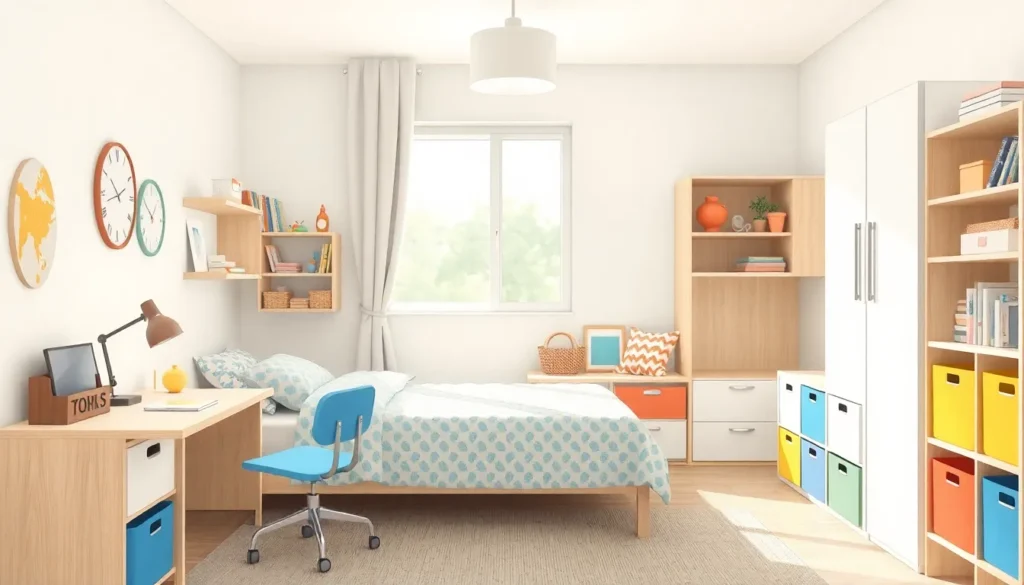
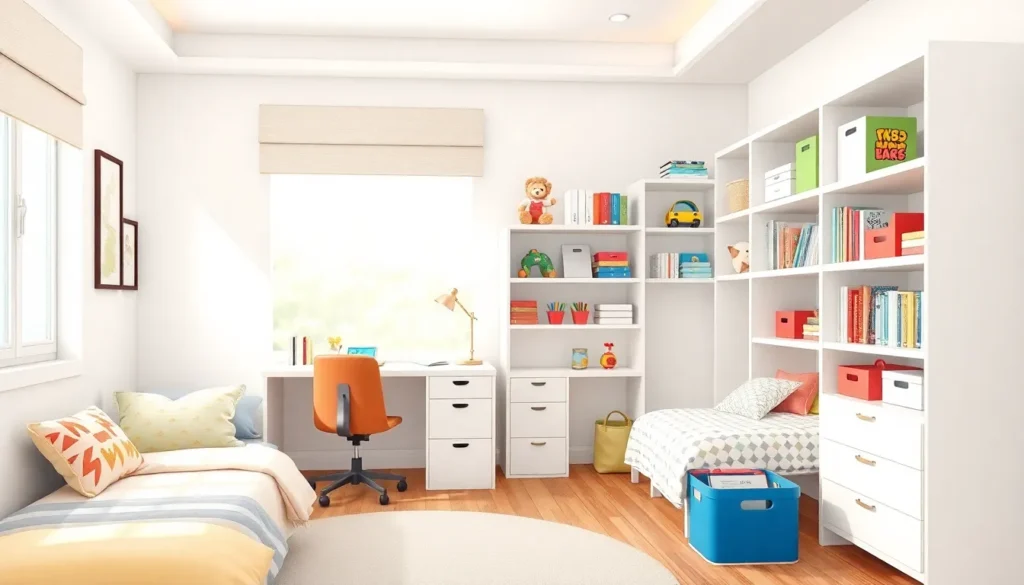
A functional kids’ bedroom incorporates essential elements that support play, study, and rest. These components blend practicality with creativity, ensuring the space is both enjoyable and accommodating.
Furniture Choices
Selecting the right furniture is crucial for maximizing functionality. A bed should be comfortable and appropriately sized to promote restful sleep. Desks tailored for homework encourage focus and productivity. Chairs must support proper posture for extended periods of study or play. Additionally, including a cozy reading nook with cushions or a small bookshelf fosters a love for reading. Sturdy furniture crafted from safe materials adds longevity and safety to the room’s design.
Storage Solutions
Efficient storage solutions help minimize clutter and maintain organization. Bins and baskets are perfect for keeping toys and books neatly stored and within reach. Shelving units create vertical space for displaying items or stowing away supplies. Utilizing under-bed storage maximizes often-overlooked areas, while clothes hampers promote easy cleanup. Each storage option not only enhances tidiness but also empowers kids to participate in their room’s upkeep, nurturing responsibility and independence.
Themes And Styles For Kids Bedrooms
Creating a themed kids’ bedroom adds a fun and personalized touch, making the space more engaging. Designing with a strong theme allows children to immerse themselves in their favorite worlds.
Popular Themes
Animal, space, and fairy tale themes stand out as favorites among kids. Animal themes incorporate wildlife décor and plush toys, inspiring curiosity about nature. Space themes often feature glowing stars and planets, igniting imagination about the universe. Fairy tale themes transport kids into magical realms filled with princesses or adventurous knights. Sports themes celebrate team spirit, filling the room with memorabilia and colors representing favorite teams. Lastly, adventure themes turn bedrooms into jungles or pirate ships, offering endless opportunities for play.
Color Palettes
Selecting a color palette sets the mood for a child’s bedroom. Soft pastels promote calmness and relaxation, making them ideal for sleep spaces. Bright, bold colors stimulate energy, perfect for play areas. Neutral tones create a versatile backdrop, allowing for flexible styling. Choosing color combinations, such as blue and yellow or pink and green, can reflect personal preferences. Incorporating accent colors through accessories and artwork helps to maintain visual interest. It’s crucial to align the chosen palette with the overall theme to ensure harmony throughout the room.
Safety Considerations In Kids Bedrooms
Safety in a child’s bedroom significantly impacts their overall well-being and development. Prioritizing safety creates a secure haven that encourages exploration and creativity.
Choosing Non-Toxic Materials
Selecting non-toxic materials ensures a healthier environment. Furniture options, including beds and dressers, often contain harmful chemicals. Opting for products certified by organizations like Greenguard lowers exposure to indoor toxins. Paints must be low-VOC or VOC-free, reducing harmful emissions. Fabrics and textiles should come from natural fibers like cotton or linen, avoiding synthetic alternatives that can off-gas. Choosing these materials fosters safety and promotes better air quality in the room.
Childproofing Essentials
Childproofing essentials play a critical role in preventing accidents. Install corner guards on sharp furniture edges to minimize injury risk. Secure heavy furniture to walls with anchors to prevent tipping. Cover electrical outlets with safety plugs; this action reduces the chances of shocks. Keep small items out of reach; toys with small parts pose choking hazards. Window guards or locks prevent falls while allowing natural light and ventilation. Implementing these measures protects children and enhances peace of mind for parents.
Tips For Maximizing Space In A Kids Bedroom
Selecting multifunctional furniture effectively optimizes space. Beds with built-in drawers offer convenient storage for toys and clothes. Consider lofted beds to create additional play or study areas beneath. Using a compact desk can encourage productivity while minimizing floor space.
Organizing with vertical storage solutions significantly enhances room usability. Wall shelves keep books and decorative items off the floor, reducing clutter. Hooks on walls can hold bags, hats, or artwork, making room for more activities. Baskets and bins make it easy for kids to access and store their toys.
Incorporating foldable furniture options provides flexibility in a smaller space. Folding tables can accommodate activities like crafts or homework but tuck away when not in use. Finally, using an ottoman for seating can double as a storage space for blankets or games.
Creating designated zones within the room helps maximize functionality. Defining areas for sleeping, playing, and studying keeps activities organized. Space rugs can visually delineate these zones, providing a sense of order.
Utilizing flexible lighting can make a small room feel larger. Soft, adjustable lighting creates an inviting atmosphere, enhancing the overall ambiance. Installing dimmable lights allows for various activities throughout the day.
Personalizing decoration with removable decals or artwork provides an ever-changing environment. This creativity enables easy updates as the child’s interests evolve. Kids love expressing themselves, and a dynamic space reflects that individuality.