Imagine walking into an office where the walls aren’t just barriers but transparent portals to creativity. Glass walls are revolutionizing office interiors, turning mundane cubicles into vibrant, open spaces that spark collaboration and innovation. They let in natural light, making even the grumpiest co-worker feel a bit more cheerful—who knew sunlight could be a mood booster?
Overview Of Glass Walls For Office Interiors
Glass walls serve as innovative solutions in modern office interiors, promoting an open atmosphere. Businesses favor them for their ability to create vibrant spaces that encourage interaction and teamwork. Natural light flows seamlessly through glass panels, illuminating work areas and boosting morale among employees.
In addition to aesthetics, glass walls enhance functionality. They can be installed as sliding partitions, allowing for flexible layouts that adapt to evolving work styles. Companies can configure spaces for meetings or collaborative work by modifying the arrangement of these glass structures.
Privacy options exist within glass wall systems, utilizing frosted or tinted glass. Such designs maintain openness while providing necessary confidentiality for sensitive discussions. Many organizations incorporate soundproofing enhancements for added privacy, ensuring focused work environments.
Sustainability is another reason to consider glass walls in office design. Non-toxic materials and energy-efficient coatings contribute to environmentally friendly workplaces. Many businesses appreciate that glass walls can reduce lighting costs by maximizing daylight, resulting in lower energy consumption.
These office elements align with modern design trends emphasizing transparency and connectivity. Companies adopting glass walls report increased employee satisfaction and engagement. The versatility of glass walls caters to various design aesthetics, whether contemporary or traditional.
Implementing glass walls offers numerous advantages, making them integral to modern office designs. Many organizations recognize their role in transforming workplaces, ultimately fostering a more innovative and dynamic environment.
Benefits Of Glass Walls
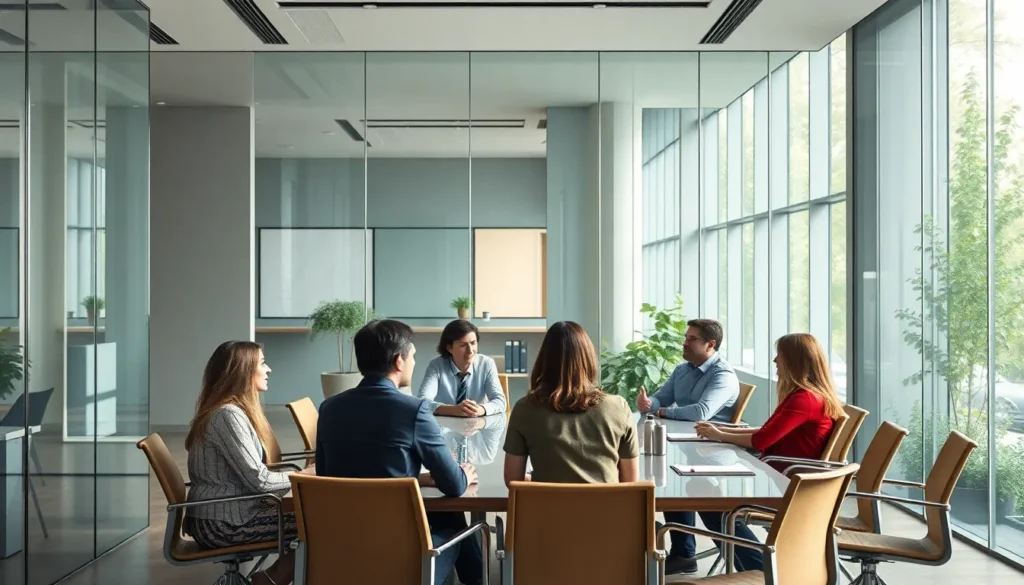
Glass walls offer significant benefits in office interiors. Their implementation enhances the overall work environment, fostering productivity and well-being among employees.
Enhanced Natural Light
Glass walls significantly improve natural light flow within office spaces. Natural light boosts morale and reduces eye strain, leading to enhanced focus. Employees benefit from increased energy levels, which contribute to greater job satisfaction. Designers appreciate how vibrant spaces promote an open feeling, minimizing the need for artificial lighting. Overall, glass walls create brighter and more inviting work environments.
Improved Aesthetics
Aesthetics improve drastically with the installation of glass walls. Contemporary designs highlight sleek, modern lines that elevate interior appeal. Unique transparency opens views and visually connects different areas, creating a seamless transition throughout the space. Glass walls can enhance brand identity, influencing how clients and employees perceive an organization. Therefore, utilizing glass elements adds a sophisticated touch to office interiors.
Increased Collaboration
Collaboration flourishes in environments featuring glass walls. Visibility encourages spontaneous interactions and communication among team members. Open layouts facilitate teamwork and brainstorming sessions, breaking down traditional barriers. Flexible configurations allow teams to adapt spaces according to specific project needs. Leadership often observes a marked increase in creativity when employees can engage freely in dynamic spaces.
Types Of Glass Walls
Glass walls enhance office interiors in various forms, each designed to meet specific needs and preferences.
Framed Glass Walls
Framed glass walls consist of a metal or aluminum framework supporting large glass panels. This design offers durability and structural integrity, making it suitable for high-traffic areas. Additionally, framed glass walls often create a distinct visual boundary, helping to delineate spaces without sacrificing light. Companies may choose this option for its ability to integrate seamlessly with other architectural elements. They also come in various finishes and colors, allowing for customization that aligns with brand identity.
Frameless Glass Walls
Frameless glass walls create a sleek, uninterrupted aesthetic by using thick glass panels secured with minimal hardware. These walls provide a modern, elegant look that emphasizes transparency and openness. Furthermore, frameless designs enhance natural light flow, fostering a bright work environment. Organizations often select this option to promote collaboration among employees while maintaining a professional atmosphere. Options for tempered glass add safety and durability, ensuring long-lasting use in office settings.
Glass Partitions
Glass partitions serve as versatile dividers within office spaces, allowing for flexible configurations. These structures can be full-height or half-height, depending on the desired level of privacy and interaction. Often incorporating features like soundproofing, glass partitions enhance focus while providing visual connectivity. Many businesses appreciate their convenience, as partitions can be moved or reconfigured to adapt to changing team dynamics. Customizable options are available, enabling companies to create unique layouts that reflect their functional and aesthetic needs.
Design Considerations
Designing office interiors with glass walls involves thoughtful consideration of various aspects, including acoustic performance and privacy options.
Acoustic Performance
Acoustic performance is essential for maintaining focus in open office environments. Glass walls can reduce noise levels with the right soundproofing enhancements. Implementing laminated or double-glazed glass solutions can significantly improve sound insulation. Companies often seek products with sound transmission class ratings that indicate their effectiveness in noise reduction. Additionally, strategic placement of glass walls helps minimize sound disturbances during collaborative sessions. Integrating fabric panels and acoustic tiles in conjunction with glass installations further enhances overall sound performance.
Privacy Options
Privacy options play a key role in office design with glass walls. Organizations often opt for frosted or tinted glass to achieve a balance between openness and confidentiality. These treatments block visibility while still allowing natural light to filter through the space. Adjustable blinds can also be incorporated to enhance privacy when needed. Transparent glass reserved for collaborative areas encourages transparency and communication, while opaque glass in meeting rooms ensures confidentiality for sensitive discussions. Adapting these options according to specific needs allows companies to maintain an inviting atmosphere without compromising employee privacy.
Installation And Maintenance
Installation of glass walls requires careful planning and skilled professionals. First, accurate measurements ensure proper fit within the office space. Next, a solid base guarantees stability, preventing any future issues. Ensuring compliance with local building codes avoids unnecessary complications during installation.
Maintenance of glass walls is straightforward and essential for longevity. Regular cleaning with non-abrasive solutions maintains clarity and aesthetic appeal. Inspecting seals and frames periodically prevents moisture intrusion, which could damage structural integrity. Adjusting any misalignments promptly avoids costly repairs in the long run.
Environmental conditions can affect installation and maintenance. Direct sunlight may lead to increased temperatures, potentially impacting glass performance. Staff training on proper cleaning techniques fosters a culture of care and respect for office assets. Implementing protective coatings enhances durability against scratches and smudges.
Timely service from qualified technicians keeps glass walls functioning optimally. Scheduling maintenance checks every six months allows early detection of wear and tear. Proper handling of glass during setup reduces the risk of chips or cracks occurring.
Meeting any specific design requirements during installation enhances functionality. For instance, specifying the right type of glass—such as tempered glass—adds safety benefits. Choosing adjustable blinds can enhance privacy based on usage at different times.
Each aspect of installation and maintenance plays a crucial role in maximizing the benefits of glass walls. They not only elevate visual connectivity but also ensure an ongoing investment in workplace efficiency and aesthetics. By prioritizing quality installation and diligent maintenance, organizations enhance employee satisfaction and overall office ambiance.
Glass walls are revolutionizing office interiors by creating open and inviting spaces that foster collaboration and creativity. Their ability to enhance natural light and improve aesthetics contributes to a more cheerful and productive work environment.
With options for privacy and soundproofing, these glass structures cater to diverse work styles while maintaining an atmosphere of openness. The sustainability aspect further aligns with modern design trends, making glass walls a smart choice for organizations looking to boost employee satisfaction.
By investing in quality installation and maintenance, businesses can ensure the longevity and effectiveness of glass walls. This thoughtful approach solidifies their role as a vital component in contemporary office design, paving the way for a more dynamic and engaging workplace.