In today’s fast-paced work environment, the traditional cubicle is about as exciting as watching paint dry. Enter collaborative office interiors—a game-changer that transforms mundane spaces into vibrant hubs of creativity and teamwork. Picture this: open spaces filled with comfy seating, colorful art, and a dash of quirky design that invites spontaneous brainstorming sessions.
Not only do these interiors spark innovation, but they also make the 9-to-5 grind a little less grindy. Employees thrive in spaces that encourage interaction and collaboration, leading to better ideas and happier teams. So why stick to the old ways when you can create an office that feels less like a prison and more like a playground? Embrace the future of workspaces and watch productivity soar.
Overview of Collaborative Office Interiors
Collaborative office interiors prioritize open spaces and flexible designs. These environments facilitate interaction among team members and creative problem-solving. Instead of isolated cubicles, modern offices feature comfortable seating areas and shared workspaces. Art installations and vibrant colors inject energy into these places, reflecting the brand’s identity.
Design elements often include adjustable furniture, allowing employees to switch between sitting and standing. High-performing teams thrive in spaces that encourage communication. Often, these interiors incorporate technology hubs, providing easy access to tools necessary for collaboration.
Surroundings like break rooms and lounges also play a crucial role, offering areas for informal discussions. Productivity increases when employees feel relaxed and energized. Natural light significantly enhances mood and focus, promoting a healthier work environment.
Fishbowl meeting rooms provide transparency for brainstorming sessions. Increasingly, organizations recognize the importance of incorporating biophilic design, connecting individuals with nature. Elements like living walls or indoor plants contribute to overall well-being.
Survey data indicates employees prefer environments that foster teamwork and creativity. Approximately 70% of participants in a recent study reported higher job satisfaction in collaborative environments. Businesses adopting these interior styles often experience improved retention rates, further validating this shift.
These workspaces exemplify the future of office design. By embracing collaborative office interiors, companies enhance not only productivity but also employee morale. Spaces that promote interaction and creativity substantially influence organizational success.
Benefits of Collaborative Office Interiors
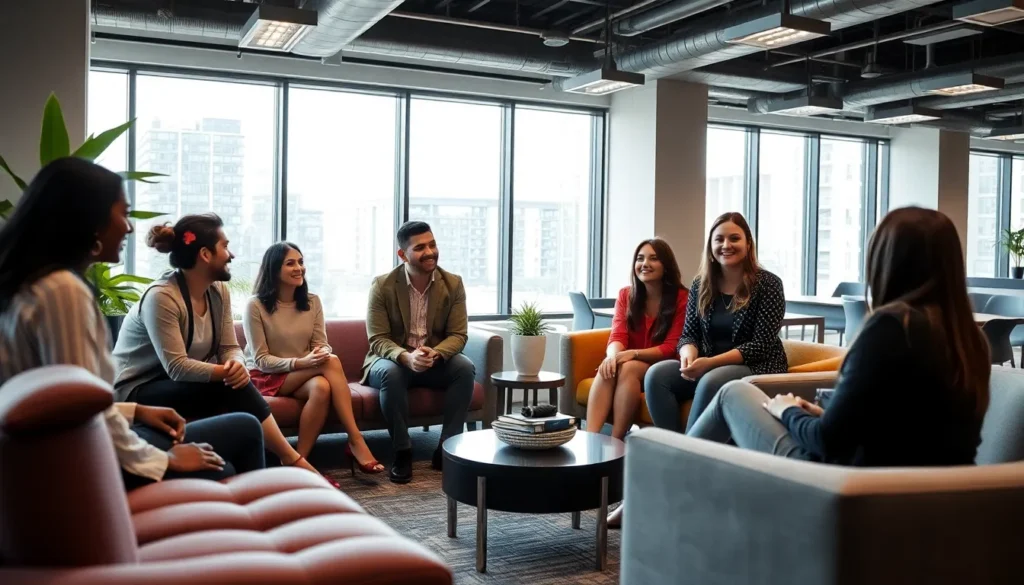
Collaborative office interiors present various advantages that can transform workplace dynamics. These environments enhance employee interaction, drive innovation, and elevate job satisfaction.
Enhanced Communication
Open spaces encourage spontaneous conversations among team members. Employees can easily share ideas and updates in a relaxed atmosphere. Studies show that approximately 70% of employees favor settings that promote open dialogue and teamwork. Informal gathering areas, like lounges and break rooms, facilitate these exchanges and build relationships. Furthermore, technology hubs create connections, allowing team members to collaborate swiftly on projects. As a result, improved communication leads to fewer misunderstandings and a more cohesive work culture.
Increased Creativity
Flexible designs spark creativity and facilitate brainstorming sessions. Employees experience greater freedom to explore ideas in collaborative spaces. The presence of adjustable furniture allows for varied work styles, further promoting inventive thinking. Natural light and biophilic elements contribute positively to the creative process by enhancing mood and reducing stress. When team members can interact with one another easily, innovative solutions often emerge. Ultimately, these collaborative interiors foster a culture where unique ideas flourish and creativity thrives.
Design Principles for Collaborative Office Interiors
Collaborative office interiors emphasize design principles that foster engagement and creativity. Effective design not only enhances productivity but also encourages teamwork among employees.
Open Spaces and Layouts
Open spaces play a crucial role in collaborative office design. These layouts eliminate barriers and create an inviting environment for interaction. A well-planned open area facilitates spontaneous conversations, fostering a relaxed atmosphere. Employees feel more comfortable sharing ideas in a welcoming setting. Additionally, shared workspaces allow for better communication, helping teams stay connected. Natural light enhances the feeling of openness and positivity. Around 70% of employees prefer environments emphasizing teamwork and creativity, showcasing the importance of effective layouts in driving collaboration.
Incorporation of Flexible Furniture
Flexible furniture enhances the adaptability of collaborative spaces. Adjustable desks and movable seating arrangements enable employees to customize their work environments. Different set-ups cater to various tasks, promoting comfort and collaboration. Furniture choices should encourage group discussions while also allowing for quiet reflection when needed. Mobile furniture fosters easy transitions between collaborative and individual work, accommodating diverse workflow styles. Integration of these elements supports the idea that a dynamic workspace can lead to increased creativity and job satisfaction among employees.
Best Practices in Implementing Collaborative Office Interiors
Incorporating collaborative office interiors requires strategic planning. Prioritize flexible layouts that remove physical barriers to encourage client and employee interactions. Consider open workspaces, as studies show that about 70% of employees favor environments that promote collaboration. This layout supports natural conversations and facilitates relationship building.
Focus on integrating varied seating arrangements. Mix comfortable sofas, lounge chairs, and adjustable desks to accommodate different working styles. Providing multiple options helps individuals personalize their space while fostering group work.
Incorporate technology seamlessly. Equip shared areas with the latest conferencing tools and interactive displays to streamline communication. Employees benefit when technology enhances collaboration without intruding on interpersonal connections.
Add inviting break rooms and lounges. These areas serve as informal meeting points for brainstorming sessions or relaxation. Their design influences employee well-being, promoting a balance between work and downtime.
Ensure natural light is abundant throughout the office. Studies indicate that ample sunlight improves mood and productivity. Use glass partitions or skylights to maximize daylight exposure in workplaces.
Integrate biophilic design elements like plants and living walls. These features not only boost aesthetics but also enhance air quality. Employees feel more connected to nature which can increase creativity and reduce stress.
Solicit employee feedback during the implementation process. Engaging team members leads to a design that meets their needs and preferences. Their insights can provide valuable guidance for refinement and ensure the environment cultivates teamwork.
Adopt a continuous improvement mindset. Regularly assess the effectiveness of collaborative spaces and make adjustments as needed. This approach helps maintain an evolving office that adapts to changing dynamics and enhances team collaboration.
Challenges in Collaborative Office Interiors
Transitioning to collaborative office interiors presents several challenges. Noise levels often become a concern. Open spaces can lead to distractions, making it difficult for employees to concentrate. Research shows that approximately 70% of employees favor environments promoting teamwork, yet excessive noise can hinder productivity.
Privacy issues arise within these designs. Employees may feel uncomfortable discussing sensitive topics in open settings. Providing designated areas for private conversations becomes essential to counter this challenge. Additionally, balancing collaboration and focus requires intentional planning.
Flexibility in furniture and layouts poses another hurdle. Adjusting workspaces to suit various needs can be resource-intensive and requires ongoing management. Employees must adapt to different settings, which may lead to confusion if not executed properly. Therefore, strategic planning is crucial.
Cultural shifts accompany the move to collaborative interiors. Employees accustomed to traditional work environments may resist change. Effective change management techniques become necessary to facilitate the transition. Leadership plays a vital role in promoting acceptance and understanding of the new layout.
Technology integration also presents its own challenges. Ensuring that all tools and resources support collaboration involves careful selection and installation. Technology hubs must be user-friendly to avoid frustrating the employees who rely on them.
Balancing aesthetics with functionality is paramount. While appealing designs attract employees, they must also serve their intended purpose. Striking the right balance can be challenging, requiring thoughtful design decisions.
Ultimately, addressing these challenges facilitates the successful implementation of collaborative office interiors. Proactive strategies can enhance productivity, foster teamwork, and improve job satisfaction.
Embracing collaborative office interiors can transform the workplace into a hub of creativity and productivity. By prioritizing open layouts and flexible designs, organizations can foster an environment where employees thrive and teamwork flourishes.
The integration of technology and biophilic elements enhances both aesthetics and functionality, supporting a culture of innovation. As companies navigate the challenges of this transition, focusing on employee feedback and strategic planning will be crucial for success.
Ultimately, the shift towards collaborative spaces not only boosts job satisfaction but also drives organizational success in an increasingly dynamic work landscape.