When it comes to bedroom design, texture is the unsung hero that can transform a snooze-fest into a sleep sanctuary. Imagine sinking into a plush velvet throw or running your fingers over a chunky knit blanket. It’s like giving your space a warm hug—who wouldn’t want that?
Textures add depth and personality to a room, making it feel inviting and unique. From sleek satin sheets that whisper luxury to rustic wood accents that scream cozy cabin vibes, the right textures can elevate your bedroom from blah to blissful. So, if you think your bedroom’s just a place to crash after a long day, it’s time to rethink that approach. Let’s dive into how you can weave texture into your sanctuary and create a space that’s not just for sleeping, but for dreaming big.
Understanding Bedroom Texture
Bedroom texture plays a vital role in creating a warm environment. Various materials, colors, and patterns contribute to comforting atmospheres.
Definition of Bedroom Texture
Bedroom texture refers to the surface quality of materials within the space. This encompasses textiles like bedding, curtains, and rugs. Different finishes on furniture also affect overall texture. Soft fabrics like cotton and linen create a casual feel, while silk and velvet can introduce elegance. The layering of these materials enhances the sensory experience, making the bedroom more inviting.
Importance of Texture in Bedroom Design
Texture influences the emotional response to a bedroom. It transforms a standard room into a personalized oasis through tactile experiences. Cozy elements such as chunky knit blankets invite relaxation. Incorporating a range of textures creates visual interest and depth, making a space feel more dynamic. Additionally, contrasting materials can evoke various moods. For instance, combining rustic wood with smooth glass can balance warmth and modernity, enriching the overall design.
Types of Bedroom Textures
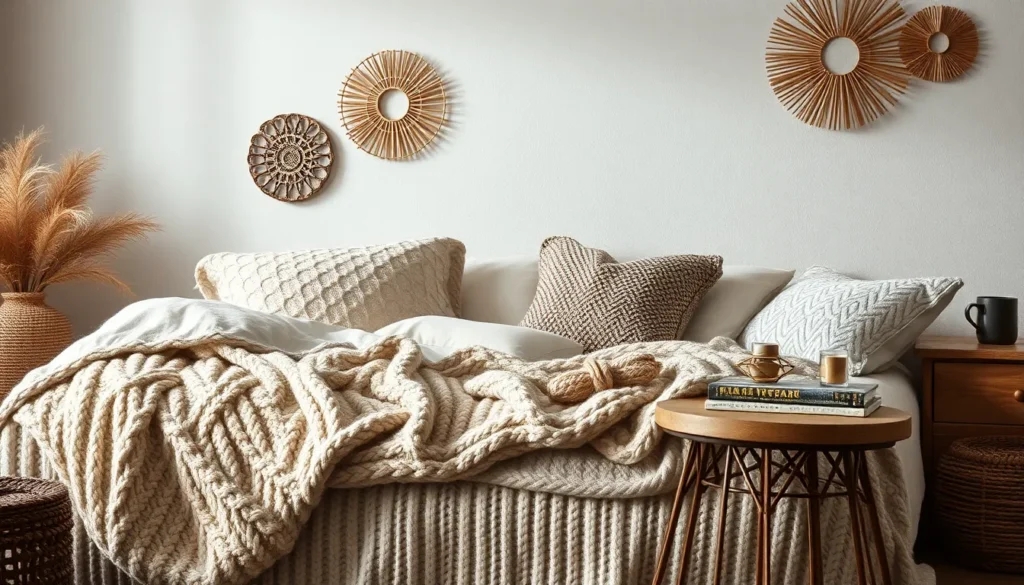
Bedroom textures fall into three main categories: soft, hard, and natural. Each type contributes to the overall ambiance and functionality of the space.
Soft Textures
Soft textures create a warm and welcoming atmosphere. Fabrics such as cotton, linen, and velvet enhance comfort. Cozy elements like plush pillows and chunky knit blankets add a layer of relaxation. Layering these soft materials fosters a tactile experience that invites relaxation. Incorporating various shades and patterns can enrich the visual appeal, making the space inviting.
Hard Textures
Hard textures provide a structural balance within the bedroom. Materials like wood, metal, and glass introduce depth and character. Rustic wooden furniture contrasts beautifully with sleek metal accents. Applying different finishes, such as matte or glossy, changes the light reflection and perceived warmth. Combining hard textures with soft elements creates a dynamic, well-rounded design that’s both functional and stylish.
Natural Textures
Natural textures connect the bedroom with the outdoors. Elements like stone, wood, and woven plant fibers establish an organic ambiance. Integrating these materials often brings a sense of calmness and tranquility. They support a serene environment conducive for relaxation. Choosing eco-friendly, sustainable options enhances not only aesthetics but also personal well-being.
Incorporating Texture into Bedroom Design
Incorporating texture in bedroom design enhances the overall ambiance. Various elements can elevate space beyond functionality.
Textiles and Fabrics
Textiles significantly influence the bedroom’s feel. Soft fabrics like cotton and linen promote comfort, while plush velvet adds luxury. Layering these textiles creates a cozy atmosphere. Consider mixing a chunky knit blanket with smooth satin sheets for visual contrast. Incorporate throw pillows with varying textures to add depth and interest. Don’t forget area rugs; they provide warmth and can anchor the design. Choose ones made from natural fibers for added comfort and style.
Wall Finishes
Wall finishes play a critical role in establishing texture. Paint adds color and can create various effects, such as matte for understated elegance or glossy for a modern look. Wallpaper with tactile designs offers depth and character. Wood paneling introduces warmth, providing a rustic touch. In contrast, smooth plaster finishes create a minimalist aesthetic. Accent walls featuring reclaimed materials, like brick or stones, can serve as stunning focal points in a bedroom. Explore different finishes to find what complements the overall design best.
Decorative Elements
Decorative elements contribute significantly to bedroom texture. Bedside tables made of wood or metal add structural balance to soft textiles. Artwork featuring three-dimensional pieces engages the visual senses while adding personality. Incorporate woven baskets for storage; they introduce natural texture and functionality. Selecting curtains with varying degrees of opacity can enhance light and privacy. Utilize unique sculptures or ceramic vases to create visual interest on shelves or dressers. Each decorative choice amplifies the sensory experience, fostering a personalized sanctuary.
The Impact of Bedroom Texture on Mood
Bedroom texture plays a crucial role in shaping mood and atmosphere. Different textures can evoke specific emotional responses, leading to a more harmonious environment.
Creating a Relaxing Atmosphere
Smooth linens inspire tranquility, while soft cotton promotes warmth. Layered textures encourage comfort, making the bedroom an inviting retreat. Chunky knit blankets provide a sense of coziness, enhancing relaxation after a long day. Plush cushions add an inviting touch, inviting users to unwind. Incorporating these materials creates a sanctuary, ideal for rest and rejuvenation. Tactile experiences, such as the feel of velvet or the softness of fleece, significantly contribute to a calming ambiance.
Enhancing Aesthetic Appeal
Varied textures contribute to visual interest in bedroom design. Combining silk curtains with wooden furniture creates a striking contrast that captivates attention. Linen bedding paired with an intricate woven rug enhances depth and richness. Textured wallpaper, featuring subtle patterns, adds dimension to walls without overwhelming the space. Metallic accents, like brass lamps, offer a touch of elegance while complementing soft textiles. Incorporating these diverse textures enhances overall aesthetic appeal, transforming the bedroom into a stylish haven.
Embracing texture in bedroom design can truly redefine the space. By thoughtfully combining soft, hard, and natural elements, one can create a harmonious environment that invites relaxation and comfort. The right textures not only enhance the aesthetic appeal but also elevate the emotional experience, turning a simple room into a personalized retreat.
As individuals explore various materials and finishes, they’ll discover how each layer contributes to a unique atmosphere. From the warmth of a chunky knit blanket to the elegance of silk curtains, every choice plays a role in crafting a sanctuary. Ultimately, prioritizing texture transforms the bedroom into an oasis of tranquility and style, making it a cherished part of daily life.