Imagine walking into your home and having it spring to life like a scene from a sci-fi movie. With IoT home automation, this isn’t just a fantasy; it’s a reality that’s knocking at your door—literally. From smart lights that know when you’re home to thermostats that adjust themselves faster than you can say “turn down the heat,” the future of living is smarter, simpler, and a whole lot cooler.
Gone are the days of fumbling for light switches or arguing over the thermostat settings. Now, your home can do the thinking for you. With a few taps on your phone or a casual voice command, you can control everything from your coffee maker to your security system. Who knew being lazy could be this high-tech? Embrace the convenience and let IoT home automation transform your living space into a seamless blend of comfort and efficiency.
Overview of IoT Home Automation
IoT home automation refers to integrating network-connected devices that enhance home management. This technology allows seamless control and monitoring of home systems through smart devices.
Definition of IoT Home Automation
IoT home automation involves the use of Internet of Things technology. Devices connect to the internet and communicate with each other, enabling automation of various tasks. This includes smart thermostats that adjust temperatures automatically and security cameras that monitor activities remotely. Homeowners can manage lighting, climate, and security systems with a few taps on a smartphone or voice commands.
Benefits of IoT Home Automation
Convenience ranks high among the benefits of IoT home automation. Tasks that once required manual effort now occur automatically, enhancing daily life. Energy efficiency improves as smart devices optimize usage based on real-time data. Home security strengthens with remote monitoring and alerts for unusual activity. Additionally, customizable settings allow homeowners to personalize their environments easily. These features contribute to a smarter living experience, making routines more efficient and enjoyable.
Key Components of IoT Home Automation
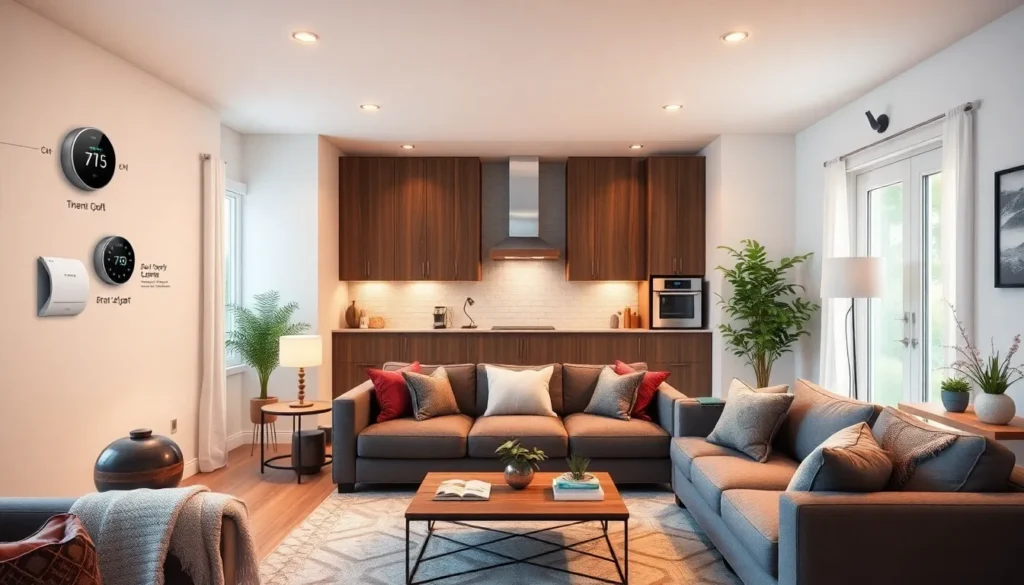
IoT home automation relies on several key components that work together to enhance the functionality of homes. These elements create a network where devices and systems communicate seamlessly.
Smart Devices and Appliances
Smart devices and appliances play a crucial role in IoT home automation. Examples include smart thermostats, lighting systems, and security cameras. These devices connect to the internet, allowing homeowners to control them remotely. Programmable features help optimize energy usage, contributing to lower utility bills. In addition, smart appliances can provide notifications about tasks like laundry cycles and refrigerator temperatures. Homeowners experience increased convenience with these technologies, streamlining daily routines. Brands like Philips Hue and Nest exemplify innovation in this space.
IoT Sensors and Controllers
IoT sensors and controllers enable optimal automation of home systems. Sensors, such as motion detectors and temperature monitors, gather real-time data, improving responsiveness and efficiency. Controllers, including hubs and apps, manage communication between devices to facilitate automation. For instance, a smart hub can integrate various sensors to create customized home environments based on user preferences. Using voice commands or smartphone applications, individuals can adjust settings as needed. This integration not only enhances security but also elevates comfort levels. Products from companies like SmartThings and Amazon Echo demonstrate the effectiveness of these systems.
How to Implement IoT Home Automation
Implementing IoT home automation involves several key steps that ensure a seamless integration of smart technology into daily living. Homeowners can create a connected environment by carefully selecting compatible devices and establishing a smart hub.
Choosing the Right Devices
Selecting the right devices is crucial for effective IoT home automation. Smart lights, thermostats, and security cameras serve as fundamental components of a connected home. Homeowners should consider compatibility with existing systems and platforms like Amazon Alexa or Google Assistant. Energy-efficient devices, such as smart plugs or motion sensors, enhance automation and help reduce utility costs. Reliable brands like Philips Hue or Nest provide trusted options that integrate well and deliver optimal performance. Assessing individual needs and preferences leads to a customized automation experience that improves comfort and convenience.
Setting Up a Smart Hub
Setting up a smart hub streamlines the management of IoT devices within the home. This centralized system facilitates communication between diverse devices and allows for easy control via smartphone or voice commands. Choosing a compatible hub, like SmartThings or Amazon Echo, ensures robust device connectivity. Installation typically involves connecting devices to the hub through a mobile app or web interface. By organizing devices into groups or routines, homeowners can enhance automation. For instance, creating a “Good Night” routine can turn off lights and adjust the thermostat simultaneously. Establishing a smart hub transforms a house into a cohesive, responsive environment.
Challenges in IoT Home Automation
IoT home automation faces significant challenges that can hinder optimal functionality and user satisfaction. Addressing these concerns ensures a smoother smart home experience.
Security Concerns
Security risks remain a top issue in IoT home automation. Vulnerable devices can serve as entry points for cyber attacks, compromising personal data and home safety. Users must consistently update software and firmware to mitigate risks. Implementing robust security protocols, such as encryption and strong user authentication, reduces exposure to potential breaches. Moreover, monitoring connected devices for unusual activity strengthens overall system integrity. Homeowners should prioritize adopting products from reputable brands that prioritize security in their designs.
Compatibility Issues
Compatibility challenges arise when integrating various IoT devices within a single home system. Different brands and products may not communicate effectively with one another, leading to frustrating experiences. Selecting devices that conform to common communication standards simplifies integration and enhances overall functionality. Researchers indicate that smart hubs, which consolidate control of multiple devices, alleviate many compatibility concerns. Additionally, checking device specifications before purchasing ensures seamless interactions among devices. Homeowners ought to evaluate compatibility before investing to maximize the performance of their smart home ecosystem.
Future of IoT Home Automation
The future of IoT home automation presents exciting developments that enhance everyday living. Continued advancements in technology promise even greater integration of smart devices within homes.
Trends to Watch
Adoption of artificial intelligence in IoT home automation transforms user experiences. Intelligent algorithms personalize settings based on user behavior, improving convenience and efficiency. Increased focus on energy efficiency becomes evident as homeowners seek sustainable solutions. Technologies such as energy-monitoring devices optimize consumption patterns while lowering costs. Interoperability among devices gains traction, allowing different brands to communicate seamlessly. This interoperability fosters a cohesive ecosystem where devices enhance one another’s functionalities. Adoption of voice control systems continues, enabling hands-free operation for various tasks. Voice assistants streamline everyday routines, making technology more accessible.
Innovations on the Horizon
Emerging technologies promise a smarter home environment. Expansion of 5G networks enables faster data transmission, allowing IoT devices to operate more effectively. The incorporation of augmented reality could change how users interact with their home automation systems. Homeowners may visualize and control smart devices in a more intuitive manner. Energy harvesting becomes a significant focus, allowing devices to charge themselves through ambient energy sources. Innovations in sensor technology lead to enhanced monitoring capabilities, providing real-time data on home conditions. As privacy concerns grow, designers prioritize security features, ensuring user data remains protected. AI-powered home security systems adapt to threats, offering better protection options.
Embracing IoT home automation opens the door to a smarter and more efficient lifestyle. With the ability to control devices through smartphones and voice commands, homeowners can streamline their daily routines and enhance comfort. The integration of smart technology not only boosts convenience but also promotes energy efficiency and security.
As advancements continue to shape this field, users can look forward to even more personalized experiences and seamless device interactions. By prioritizing compatibility and security, homeowners can fully enjoy the benefits of a connected home. The future of IoT home automation promises to transform living spaces into responsive environments that cater to individual needs.