In a world where the ordinary just won’t cut it, luxe interiors and design are the ultimate game-changers. Imagine walking into a space that feels like a five-star hotel but without the room service bill. It’s not just about aesthetics; it’s about creating an experience that whispers sophistication and shouts comfort.
Overview of Luxe Interiors and Design
Luxe interiors focus on creating spaces that blend elegance with comfort. Such designs draw inspiration from high-end hotels, where sophistication defines every detail. Soft materials and rich textures create an inviting atmosphere, enhancing the overall appeal of a home. Furniture choices prioritize quality, often featuring fine woods, plush fabrics, and unique finishes.
Lighting plays a crucial role in luxe design, as it highlights architectural details and creates a warm ambiance. Designers often incorporate statement lighting fixtures to serve as focal points, adding personality to each room. Color palettes lean toward neutral tones, accented by bold hues in decor and accessories to maintain harmony while providing visual interest.
Art and accessories contribute substantially to the overall aesthetic. Original artwork and carefully curated collections enhance the luxury experience by adding depth and character. Functional spaces seamlessly integrate with decorative elements, ensuring every detail serves a purpose without sacrificing style.
Sustainability also finds its place within luxury design. Eco-friendly materials and energy-efficient solutions become increasingly important for those pursuing opulent yet responsible living. Integrating technology through smart systems offers convenience while maintaining a chic appearance.
Ultimately, luxe interiors inspire tranquility and refinement, setting a high standard for modern living. Embracing these principles leads to environments that exude warmth and invite relaxation, ensuring that every space feels like a retreat.
Key Elements of Luxe Interiors
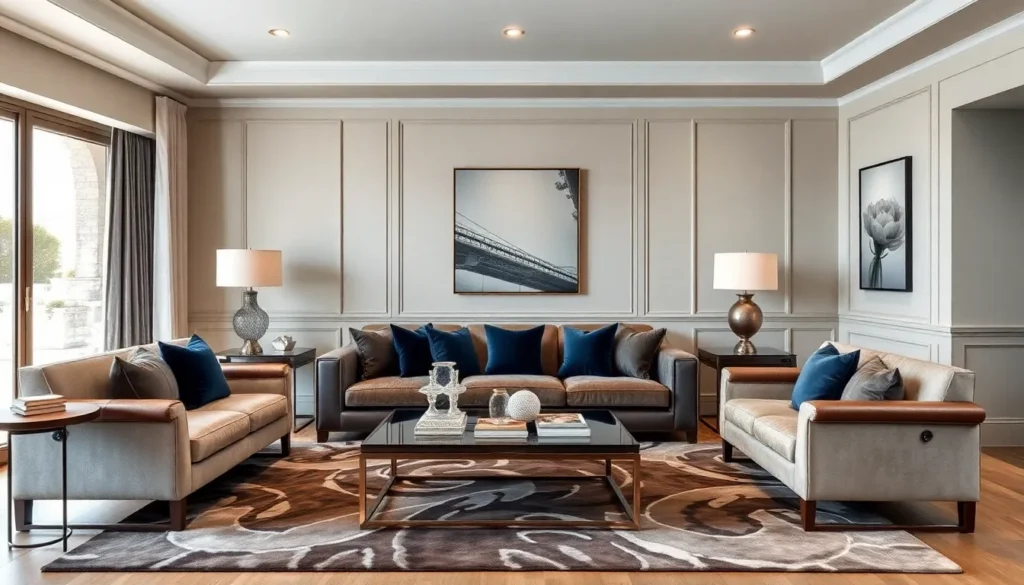
Luxe interiors combine elegance and comfort, creating spaces that exude sophistication. Key elements contribute to this refined style.
Color Palettes
Neutral tones form the foundation of luxe interiors, often serving as a backdrop. Bold hues can act as accents, adding depth without overwhelming the space. Beige, soft gray, and cream create a calming atmosphere while colors like emerald green or deep navy introduce vibrancy. Maintaining harmony throughout various rooms ensures a cohesive flow, reinforcing the luxurious feel.
Materials and Textures
Quality materials are essential in luxe design, with choices ranging from silk to leather. Each option enhances the tactile experience, inviting touch and admiration. Rich textures often include plush rugs and soft throws made from natural fibers. Mixing materials creates visual interest, while polished finishes on furniture add a touch of glamour. This combination of elements transforms spaces into inviting retreats, ensuring both style and comfort in every detail.
Popular Luxe Design Styles
Luxe design encompasses various styles that create sophisticated atmospheres. Each style offers unique features that elevate living spaces to new levels of comfort and elegance.
Modern Glam
Modern glam embodies a refined aesthetic that combines contemporary elements with opulent touches. Bright metals, such as gold or chrome, accentuate sleek furniture and elegant décor. Plush velvet sofas and richly textured cushions contribute to a sumptuous feel. Lighting fixtures, like oversized chandeliers, serve as dramatic focal points that enhance the overall grandeur. Color palettes frequently include deep jewel tones paired with lighter neutrals. Artwork and bold accessories finish the look, adding character and personality to the space.
Classic Elegance
Classic elegance stands the test of time through its balanced and sophisticated design. This style frequently features intricate moldings, timeless furniture pieces, and rich textiles. Antique accents complement modern furnishings, creating a seamless blend. Neutral colors such as cream, taupe, and soft gray dominate the palette, offering a calming foundation. Decorative elements like chandeliers, ornate mirrors, and fine art contribute to the overall refined atmosphere. Rooms often boast high ceilings and large windows that invite natural light, ensuring a welcoming yet luxurious environment.
Tips for Achieving Luxe Interiors
Creating luxe interiors requires careful attention to detail and a commitment to quality. Strategies focus on achieving elegance while ensuring comfort.
Selecting the Right Furnishings
Quality furnishings elevate the look and feel of a space. Opt for pieces that showcase craftsmanship and durability. Choose sofas with soft fabrics like velvet or leather for an inviting touch. Statement chairs add character to rooms, making them visually appealing. Incorporating wooden accents in furniture provides a natural warmth that balances modern aesthetics. Layering different materials, such as glass side tables with metal accents, enhances visual interest. Comfort ranks equally with style, making it essential in the selection process.
Incorporating Art and Accessories
Art and accessories play a crucial role in defining luxe interiors. Begin with oversized artworks to create focal points that draw the eye. Unique sculptures and decorative objects add personality, showcasing individual taste. Consider using decorative mirrors to enhance light and spatial perception, creating a more expansive feel. Thoughtfully curated accessories, such as vases or books, impart sophistication. Balance accessories across surfaces to avoid clutter yet maintain an inviting atmosphere. Accent pieces should reflect the overall color palette, ensuring cohesion throughout the space.
Trends in Luxe Interiors and Design
Sustainability shapes modern luxury interiors. Eco-friendly materials, like bamboo and reclaimed wood, gain popularity among discerning homeowners. Energy-efficient solutions now complement opulence, merging style with responsibility.
Smart technology enhances convenience without compromising aesthetics. Homeowners integrate automation features discreetly, allowing seamless control of lighting and temperature. These innovations elevate everyday living while maintaining a sophisticated appearance.
Rich textiles define comfort in luxe spaces. Velvet, silk, and leather continue to dominate interior design choices, offering tactile experiences that invite relaxation. Layering various textures, such as plush rugs and soft throws, creates an inviting atmosphere reminiscent of high-end retreats.
Layered lighting contains room to showcase elegance. Statement fixtures, including chandeliers and artistic sconces, command attention and establish focal points. Ambient, task, and accent lighting work together to highlight architectural details and curated decor.
Color palettes in luxury design feature neutral bases paired with bold accents. Shades like beige, soft gray, and cream establish tranquility. Deep emerald greens and navy blues provide visual interest, striking a balance between calmness and vibrancy.
Dramatic art selections enhance luxe interiors. Oversized artwork and unique sculptures reflect personal taste, adding character and depth to spaces. Thoughtful curation maintains cohesion with color palettes, avoiding clutter while enriching the overall aesthetic.
Modern glam and classic elegance represent popular design styles. Modern glam incorporates bright metals and plush materials to create inviting environments. Classic elegance, characterized by intricate moldings and rich textiles, merges antique and contemporary elements, elevating comfort and sophistication.
Luxe interiors transform living spaces into serene retreats that balance elegance and comfort. By prioritizing quality materials and thoughtful design elements, homeowners can create environments that evoke sophistication while remaining inviting.
Incorporating art and statement lighting enhances the overall aesthetic and personal touch. As trends evolve towards sustainability and smart technology, the future of luxe design embraces both opulence and responsibility.
With a keen eye for detail and a commitment to craftsmanship, anyone can achieve a luxurious atmosphere that reflects their unique style and elevates everyday living.