Open shelving has taken the design world by storm, transforming kitchens and living spaces into showcases of style and functionality. Gone are the days of hiding everything behind closed doors—now it’s all about letting your personality shine through. Who knew that displaying your favorite mugs could be the ultimate conversation starter?
But it’s not just about aesthetics; open shelving offers practical benefits too. It makes everything easily accessible, so you won’t have to play hide and seek with that elusive spice jar. Plus, it encourages an organized approach to storage—because let’s face it, no one wants a cluttered shelf looking like a tornado hit it. Embrace the open shelf revolution and discover how it can elevate your space while keeping your life just a little bit more organized.
Overview of Open Shelving
Open shelving has gained popularity in recent years, especially in kitchen and living space design. This trend reflects a shift towards embracing personal expression and style in home decor. Many homeowners appreciate how open shelving allows them to display favorite items, including mugs, books, or decorative pieces. These displays often become conversation starters, adding a layer of charm to any room.
Functionality plays a significant role in the appeal of open shelving. Items stored on open shelves remain easily accessible, promoting efficiency in daily routines. In contrast to closed storage options, which can create cluttered and out-of-reach spaces, open shelving encourages organization and tidiness. The visual impact of well-arranged open shelves transforms a room, creating an inviting atmosphere.
Open shelving suits various design styles, ranging from minimalist to eclectic. It works well in modern kitchens, providing a contemporary aesthetic while accommodating everyday needs. In living areas, open shelving can showcase curated collections, highlighting the owner’s unique tastes. Moreover, the flexibility of open shelving allows for easy rearrangement, enabling individuals to refresh their spaces without significant renovations.
Homeowners contemplating open shelving should consider a few factors. Choosing durable materials ensures that shelves withstand everyday use. Incorporating sufficient lighting enhances the visual appeal of displayed items, making them stand out. Overall, open shelving serves as a practical and stylish choice, enriching both functionality and aesthetic quality in any home.
Benefits of Open Shelving
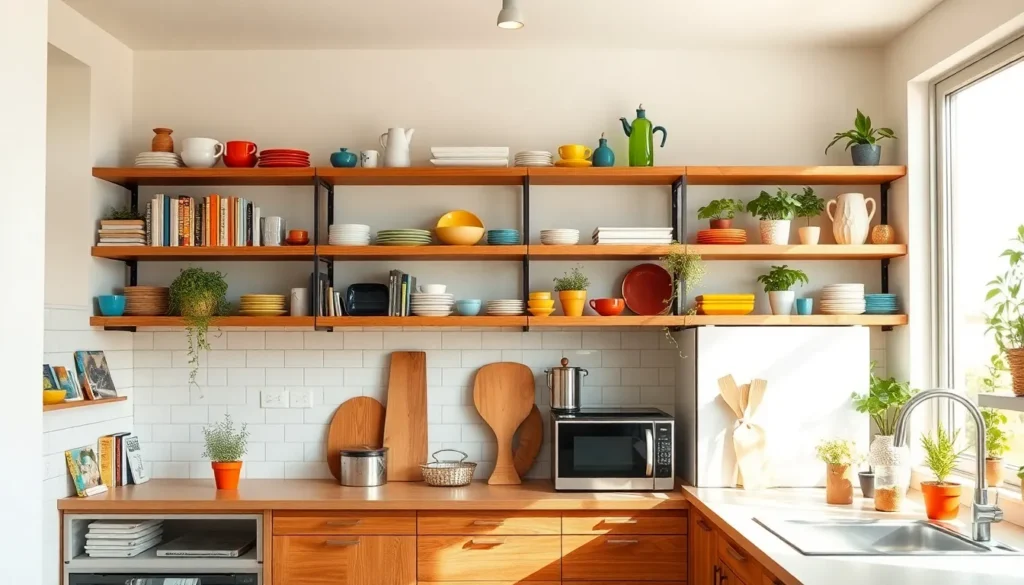
Open shelving offers various advantages that enhance both functionality and style in living spaces.
Enhanced Accessibility
Open shelving promotes easy access to kitchen items and decor. Without cabinet doors, individuals can quickly grab what they need while cooking or hosting guests. Frequent use of items remains unhampered, reducing clutter caused by constantly opening and closing doors. Open shelves encourage organization, limiting the number of items stored to what’s necessary or visually appealing. This arrangement keeps essentials easily visible, leading to more efficient use of space. Furthermore, it helps maintain a tidy atmosphere, as items are consistently maintained and displayed.
Aesthetic Appeal
Open shelving contributes significantly to the overall look of a room. By displaying curated collections, homeowners can showcase their personality and style. Designers often favor open shelves for their ability to create visual interest and a sense of openness in both small and large spaces. Complementing various design styles, open shelves can blend seamlessly with minimalist decor or eclectic accents. Important elements such as color and texture become highlights, enhancing the room’s character. Personal touches, like handcrafted items or family heirlooms, infuse life into the decor, making spaces feel inviting and unique.
Challenges of Open Shelving
Open shelving introduces several challenges that homeowners should consider. These challenges can impact functionality and aesthetics.
Maintenance and Cleaning
Cleaning open shelves requires regular upkeep. Dust and grease accumulate quickly on exposed surfaces. Frequent cleaning prevents deterioration of displayed items and maintains an attractive appearance. Items such as dishes and decorations need careful handling, as they may easily chip or break during cleaning. Choosing materials that resist dust can simplify these tasks. Utilizing easily wipeable finishes also helps minimize maintenance efforts. Overall, the time commitment for maintenance should factor into the decision to implement open shelving.
Organization Issues
Organizing open shelves presents unique difficulties. Without doors, maintaining a tidy aesthetic demands consistent effort. Items may become mixed or overcrowded, leading to a disorganized appearance. Visible clutter can detract from the overall design intent. Homeowners often need to invest in creative solutions like decorative baskets or stylish containers to maintain order. Regularly assessing displayed items encourages efficient use of space and eliminates unnecessary clutter. Planning for limited shelf capacity is essential to avoid chaotic shelves.
Choosing the Right Space for Open Shelving
Selecting the appropriate location for open shelving significantly influences both function and design. Evaluate areas requiring storage options, such as kitchens, living rooms, or home offices. Choose a wall space that offers visibility and easy access to frequently used items, enhancing practicality. Consider shelving near preparation zones in kitchens to facilitate effortless access to cookware and utensils.
Natural light enhances the visual appeal of open shelving. Install shelves in sunlit areas to accentuate displayed items and create an inviting atmosphere. Ensure that shelves complement existing furniture, blending seamlessly with the overall decor. Think about height; shelves should be positioned within comfortable reach for ease of use and organization.
Mind the dimensions of the space when planning open shelving. Allow sufficient clearance between shelves to accommodate larger items, such as cookbooks and decorative bowls. Avoid overcrowding; maintaining balance leads to an aesthetically pleasing display without a cluttered appearance. Highlight unique components by incorporating a mix of high and low shelving to add depth and interest.
Consider integrating lighting solutions for optimal visibility and ambiance. Task or accent lighting can enhance the beauty of displayed items while contributing to the room’s overall atmosphere. Assess the surrounding colors and textures when choosing materials for shelves; wooden finishes provide warmth, while metal options add a contemporary touch.
Prioritize durability in materials to withstand exposure and maintain visual appeal long-term. Whether opting for reclaimed wood or sleek glass, ensure materials align with both aesthetic preferences and functional requirements. An understanding of these key factors enables homeowners to choose the right space for open shelving, maximizing both beauty and practicality.
Design Ideas for Open Shelving
Open shelving offers various creative opportunities for homeowners. Curate collections that resonate with personal style, highlighting favorite books, unique mugs, or decorative pieces. Arrange items by color to create a uniform look. Display handcrafted items alongside modern decor for an eclectic feel.
Grouping items can enhance visual interest; try clustering similar objects together. Utilize height variations to add dimension; place taller items at the back and smaller pieces at the front for visibility. Incorporate plants or greenery to introduce life and texture into the display. Include stylish containers and baskets to maintain organization while adding aesthetic appeal.
Lighting plays a crucial role in showcasing open shelves. Incorporate wall-mounted lights to illuminate displayed items, enhancing their visual impact while creating a warm atmosphere. When selecting materials, prioritize durability; choose wood, metal, or glass that complements existing decor and accommodates frequent use.
Incorporate decorative elements like art pieces or framed photos to personalize the space. Balance practicality with design; items on open shelves should be both functional and visually appealing. Limit clutter by regularly evaluating displayed items and rotating pieces to keep the arrangement fresh.
Consider the overall theme of the room; open shelving should harmonize with design elements in kitchens and living areas. For a minimalist look, opt for sparse arrangements that emphasize simplicity. In contrast, an eclectic approach allows for mixing various styles, making each shelf tell a unique story.
Open shelving offers a unique blend of style and functionality that can elevate any space. By allowing homeowners to showcase their personality through curated collections it creates an inviting atmosphere that encourages creativity. While the maintenance and organization challenges are real they can be managed with thoughtful planning and design choices.
Selecting the right materials and incorporating adequate lighting can enhance the visual appeal of open shelves. Ultimately embracing open shelving can transform a room into a personalized haven that reflects individual tastes while promoting a tidy and organized environment. With careful consideration open shelving can be a rewarding addition to any home.