Florida, known for its sunny beaches and vibrant culture, has a rich history that dates back centuries. But when did this beautiful state officially join the United States? Understanding the timeline of Florida’s statehood reveals a fascinating journey through exploration, colonization, and political change.
On March 3, 1845, Florida became the 27th state to enter the Union. This pivotal moment marked the culmination of years of territorial disputes and aspirations for self-governance. As Florida evolved from a Spanish territory to a U.S. state, it laid the groundwork for the diverse and dynamic community we see today. Exploring the events leading up to this significant date offers insights into Florida’s unique identity and its role in American history.
Overview of Florida’s Statehood
Florida’s journey to statehood involved various stages of exploration, colonization, and transfers of power. Spain first colonized Florida in the 16th century. In 1763, Britain gained control, but Florida returned to Spain in 1783 after the American Revolutionary War. The U.S. acquired Florida in 1821 through the Adams-Onís Treaty.
The push for statehood grew throughout the early 19th century. According to historical records, Florida’s population increased significantly due to settlers moving from other states. On March 3, 1845, Florida officially became the 27th state of the United States. This event marked a crucial turning point in Florida’s development, contributing to its cultural diversity and political significance.
In the years following statehood, Florida faced challenges, including conflicts with Native American tribes and issues related to slavery. The state’s identity continued to evolve, influenced by its geography, climate, and the influx of various ethnic groups.
Historical Context
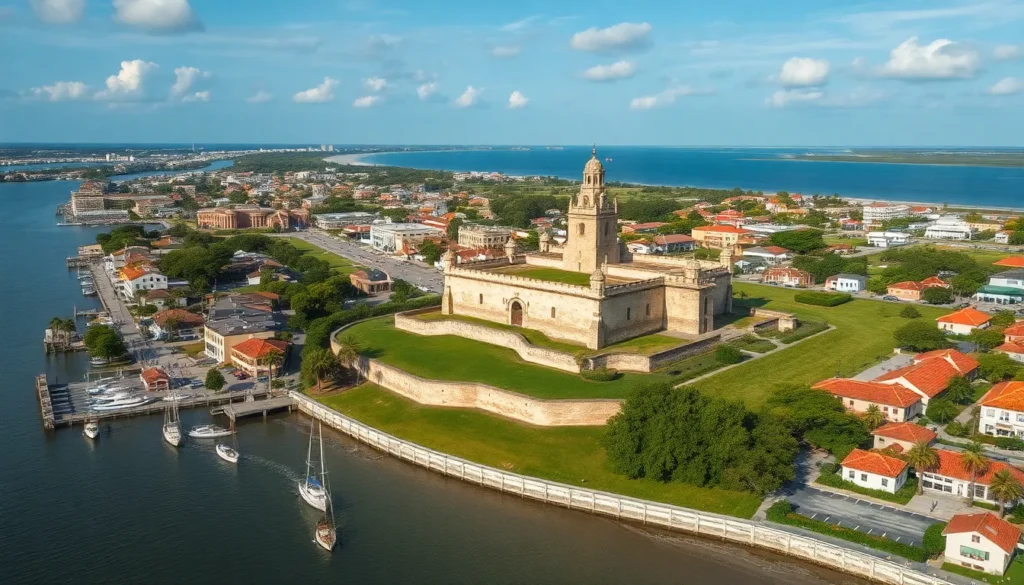
Florida’s journey to statehood involved significant historical events that shaped its identity. Understanding the pre-statehood era and the influences of Spanish and British rule provides essential context for Florida’s eventual admission as the 27th state.
Pre-Statehood Era
Florida’s pre-statehood era began with Indigenous groups, such as the Timucua and Seminole, who inhabited the region for thousands of years. European exploration commenced in the early 16th century, with Juan Ponce de León landing in 1513. Spanish colonization efforts followed, establishing settlements like St. Augustine in 1565, the oldest continuously inhabited European settlement in the U.S. Florida’s population remained sparse for centuries as conflicts, disease, and geopolitical dynamics kept settlers at bay.
Spanish and British Rule
Spanish rule marked Florida’s initial colonial period, characterized by missions aimed at converting Indigenous populations and consolidating control. In 1763, Britain acquired Florida through the Treaty of Paris, establishing two separate colonies: East Florida and West Florida. British policies encouraged settlement and agricultural development, but tensions with Native Americans and Spain persisted. In 1783, following the American Revolutionary War, Florida returned to Spanish control under the Treaty of Paris. Throughout the 19th century, the region witnessed a growing influx of American settlers, leading to calls for statehood and reflecting Florida’s shifting political and cultural landscape.
The Path to Statehood
Florida’s journey to statehood involved significant developments and historical shifts. The region’s evolution from exploration to statehood is marked by key events that defined its identity.
The Florida Territory
The Florida Territory emerged in 1822 after the U.S. acquired Florida from Spain through the Adams-Onís Treaty. The territory was initially large, encompassing both modern-day Florida and parts of Alabama and Mississippi. The U.S. established a territorial government to manage the area, prompting an influx of American settlers. Tensions arose with Native American tribes, particularly the Seminoles, as settlers pushed into their lands. The significant growth in population, primarily from migration, established a demand for statehood and self-governance.
Key Events Leading to Statehood
Several key events shaped Florida’s path to statehood:
- 1819: The Adams-Onís Treaty finalized the transfer of Florida from Spain to the U.S.
- 1822: Congress organized the Florida Territory, appointing Andrew Jackson as its first military governor.
- 1830s: The Indian Removal Act prompted conflict and resistance from Native Americans, particularly the Seminoles.
- 1835-1842: The Second Seminole War escalated tensions between settlers and Indigenous populations, influencing public opinion on statehood.
- 1845: The U.S. Congress passed legislation to admit Florida as the 27th state, formalizing the territory’s transformation into a state.
These events were crucial in reshaping Florida’s demographic landscape and building the foundation for its unique cultural identity as a state.
What Year Did Florida Become a State?
Florida became the 27th state of the United States on March 3, 1845, marking a pivotal moment in its history and identity.
The Admission Process
The admission process for Florida involved multiple stages. The U.S. acquired Florida from Spain in 1821 through the Adams-Onís Treaty. The establishment of the Florida Territory in 1822 occurred under military governor Andrew Jackson, setting the foundation for governance. As settlement increased, tensions with Native American tribes also intensified, notably with the Seminoles. Throughout the 1830s, the Indian Removal Act and the Second Seminole War significantly impacted public opinion and demographic changes, creating a strong desire for statehood. After years of advocacy, Congress officially approved the statehood bill for Florida in early 1845.
Significance of the Year
The significance of 1845 lies in its transformation of Florida’s political status. Upon admission, Florida joined the Union as a slave state, reflecting the broader national debate on slavery during that era. This change facilitated increased migration and economic development, while shaping legal and social structures in Florida. The year 1845 marked the beginning of Florida’s integration into the fabric of the United States, influencing its cultural landscape and demographics for generations.
Effects of Statehood on Florida
Statehood in 1845 significantly transformed Florida’s political and social landscape. Statehood brought Florida into the Union as a slave state, impacting its economy and demographics. Migration surged as settlers, drawn by agricultural opportunities, arrived from southern states. Increased population prompted the establishment of towns, schools, and infrastructure, fostering economic growth.
Statehood accelerated conflicts with Native American tribes. The Second Seminole War, which began in 1835 and lasted into the early 1840s, intensified following Florida’s admission to the Union. The U.S. government pursued policies aimed at the removal of Native American populations, leading to significant demographic changes.
Statehood also impacted Florida’s governance. A state constitution was established, formalizing its political framework. Florida’s government assumed greater responsibilities, including land management and infrastructure development. The state’s congressional representation increased, enabling a stronger voice in national affairs.
Economically, statehood enhanced agriculture. Florida became a key player in the production of cotton and citrus fruits. The agricultural boom attracted more settlers and investment, starting a cycle of growth that shaped local economies and communities.
Culturally, statehood contributed to Florida’s diverse identity. Immigrants and settlers from various backgrounds influenced the local traditions, languages, and customs. This blending of cultures laid the foundation for Florida’s unique societal fabric.
Overall, statehood catalyzed Florida’s evolution from a sparsely populated territory into a significant state within the Union, establishing patterns that continue to influence the state’s character and development.
Florida’s admission as the 27th state in 1845 marked a transformative era in its history. This pivotal moment not only solidified its place within the Union but also set the stage for the state’s complex social and economic dynamics. The influences of diverse cultures and the challenges of governance shaped Florida’s identity, making it a unique blend of traditions and histories. As Florida continues to evolve, the legacy of its journey to statehood remains a significant part of its narrative, influencing its growth and development for generations to come.