
Imagine walking into your home, and with a simple voice command or a tap on your smartphone, the lights adjust to your perfect setting. Home automation lighting control systems aren’t just a luxury—they’re the future of convenience, efficiency, and a sprinkle of magic in everyday life.
Overview of Home Automation Lighting Control Systems
Home automation lighting control systems significantly improve energy efficiency and user convenience. These systems enable users to control lights via smartphones, tablets, or voice commands. Smart bulbs and switches play a crucial role in this technology, allowing for individualized light settings.
Users can set schedules, adjust brightness levels, and create lighting scenes tailored to specific activities or moods. Integration with other smart home devices enhances functionality, making it possible to automate lighting based on occupancy or time of day. For example, lights can automatically turn on when someone enters a room and switch off when they leave.
Major brands offer a range of products in this category, including Philips Hue and Lutron. These products leverage Wi-Fi or Zigbee technologies to connect with home networks, ensuring responsive control. Many systems also support third-party integrations, such as voice assistants like Amazon Alexa and Google Assistant.
Home automation lighting control systems promote enhanced security by allowing users to simulate presence. They can program lights to switch on and off in a random pattern, deterring potential intruders. Energy consumption data tracking is another key feature, helping users understand usage patterns and reduce waste.
As technology advances, so do the features of these systems. Innovations include voice recognition, automated dimming, and the ability to sync with music or movies for immersive experiences. This evolution in lighting technology continues to reshape home environments, enhancing user experience and promoting sustainability.
Benefits of Home Automation Lighting Control Systems
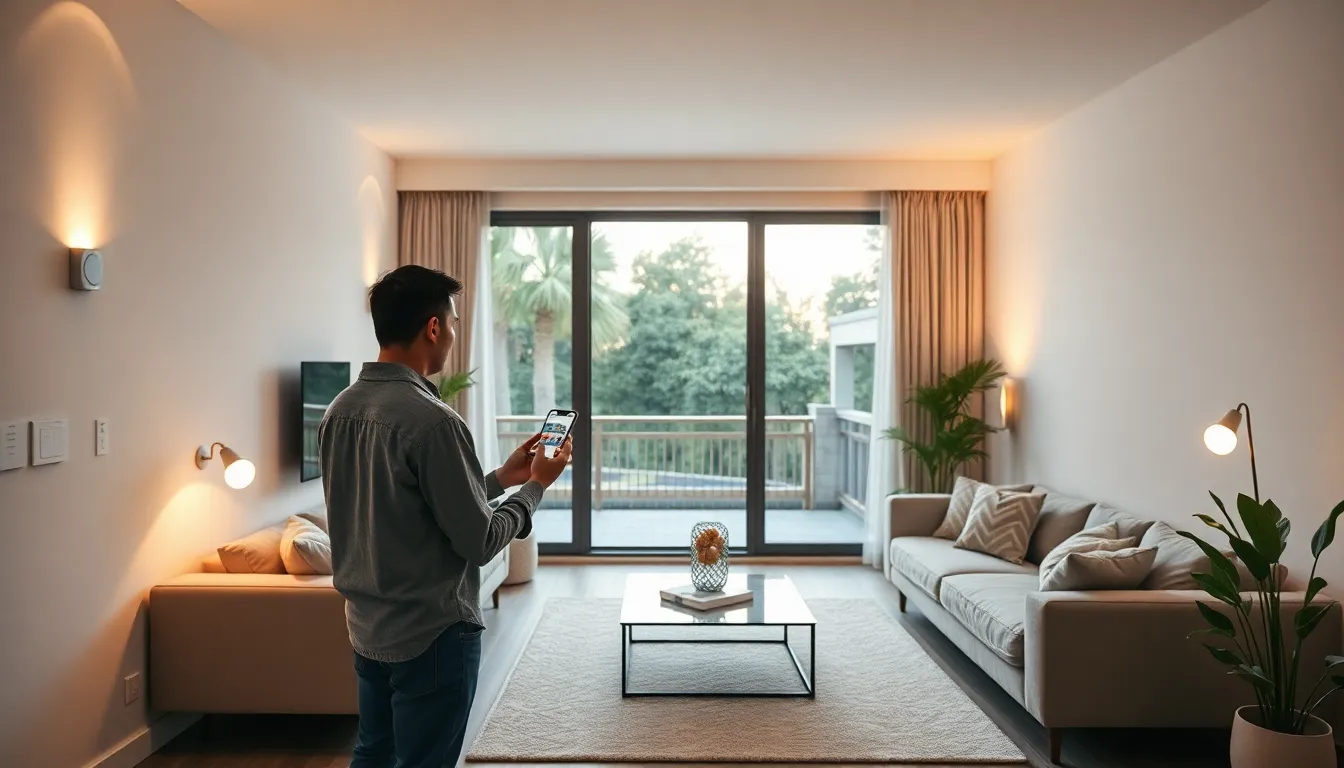
Home automation lighting control systems provide several advantages, enhancing daily life for users. These systems optimize energy usage, improve convenience, and bolster security.
Energy Efficiency
Energy efficiency remains a critical feature of home automation lighting control systems. Automating lighting reduces energy consumption by utilizing smart bulbs and timers that adjust based on occupancy. Smart systems allow users to monitor energy usage through apps, providing insights for more sustainable choices. An example includes scheduling lights to turn off during daylight hours, cutting down on waste. Moreover, integrating motion sensors further enhances conservation by ensuring lights activate only when someone is present, promoting responsible energy habits.
Enhanced Convenience
Enhanced convenience stands out as a key benefit of home automation systems. Users can adjust lighting using smartphones or voice commands, eliminating the need to manually switch lights on or off. Customized schedules enable specific lighting scenarios for various activities, from movie nights to dinner parties. Control extends beyond individual rooms, allowing adjustments throughout the home from one device. Additionally, seamless integration with smart home ecosystems means users can synchronize lights with other devices for a fully automated experience, making life easier.
Improved Security
Improved security significantly impacts homeowners using automation lighting control systems. Programming lights to turn on and off in a random pattern creates the illusion of occupancy, deterring potential intruders. Homeowners can simulate presence while away, decreasing the risk of break-ins. Integrating with smart security systems allows users to receive alerts and control lights remotely, adding another layer of protection. Furthermore, the ability to automate outdoor lighting enhances safety during nighttime, providing well-lit entryways and pathways.
Types of Home Automation Lighting Control Systems
Home automation lighting control systems come in various forms, each designed to enhance user experience and functionality. Understanding these types helps users choose the right system for their needs.
Smart Bulbs
Smart bulbs connect directly to Wi-Fi or Bluetooth networks. Users can control brightness and color through smartphone apps or voice commands. Many options include features like scheduling and energy monitoring. Philips Hue and LIFX are popular examples, providing extensive customization. Additionally, smart bulbs are often compatible with other home automation systems, allowing seamless integration.
Smart Switches
Smart switches replace existing wall switches and add automation capabilities. They offer control over multiple lights from a single point. Users can manage lights via remote controls or apps, enabling automation based on schedules or occupancy. Leading brands like Lutron and Wemo provide reliable options. Furthermore, smart switches support compatibility with popular voice assistants, enhancing convenience.
Integrated Systems
Integrated lighting systems unify various devices for a cohesive home automation experience. These systems connect smart bulbs, switches, and sensors into one platform. Users benefit from centralized control through a single app or device. Notable brands such as Control4 and Crestron offer customized solutions tailored to individual preferences. Moreover, integrated systems enhance security by automating lighting based on homeowners’ routines, adding an extra layer of protection.
Key Features to Consider
Examining essential features can significantly enhance the home automation lighting control systems experience. It’s crucial to prioritize aspects such as compatibility and user interface.
Compatibility with Other Devices
Compatibility plays a vital role in selecting a lighting control system. Users should ensure that chosen devices can connect easily with existing smart home setups. Many systems support popular protocols like Wi-Fi and Zigbee, which facilitates smooth integration with other gadgets. For example, Philips Hue bulbs harmonize with Amazon Alexa and Google Assistant seamlessly. Additionally, systems that collaborate across different brands provide more flexibility. This means homeowners can mix and match various devices for personalized automation.
User Interface and Control Options
A user-friendly interface significantly enhances the control of lighting systems. Touchscreen panels and mobile applications allow for straightforward interactions, making adjustments simple for all users. Customization options vary, enabling users to tailor lighting scenarios according to their needs. Voice control further enriches that experience, ensuring hands-free operation. Many modern systems also come with intuitive apps that provide real-time feedback on energy usage. Such features empower users to make informed decisions about their lighting needs.
Home automation lighting control systems offer a transformative approach to managing lighting in residential spaces. By enhancing convenience and energy efficiency they empower homeowners to create personalized environments that suit their lifestyles. The integration of smart technology not only promotes sustainability but also enhances security through automated features.
As technology continues to advance these systems will likely become even more sophisticated making home management simpler and more intuitive. With various options available from leading brands users can find the perfect solution to fit their needs. Embracing these innovations will lead to a more connected and efficient home experience.

